
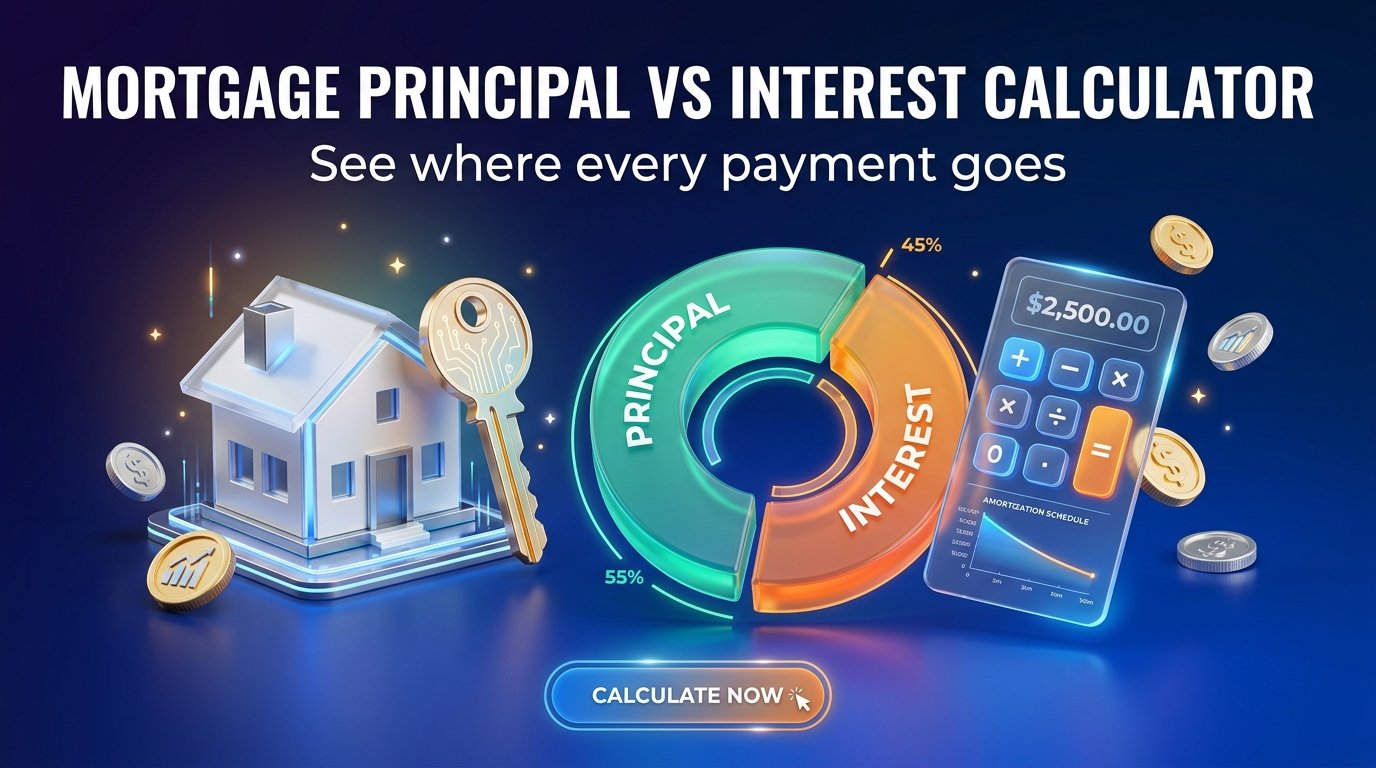
A mortgage principal interest calculator separates a fixed monthly payment into the amount reducing debt and the amount charged for borrowing. Homeowners can use this view to understand a selected payment and the cumulative split across the modeled loan term.
Mortgage principal and interest calculator
Your entries stay in your browser. This calculator makes no external requests.
How to use this mortgage principal interest calculator
- Enter the mortgage amount before interest.
- Add the annual fixed rate and repayment term from the scenario being evaluated.
- Optionally choose a payment month, beginning with month one.
- Review that month’s principal and interest portions, then compare the full-term totals and visual split.
How principal and interest change over time
The calculator first uses the fixed-payment equation to determine the scheduled monthly principal-and-interest amount. The monthly rate is the annual rate divided by 12 and 100, and the payment count is the number of years multiplied by 12:
M = P × r × (1 + r)n ÷ ((1 + r)n − 1)
For a selected month, interest equals the opening balance multiplied by the monthly rate. Principal is the payment minus interest. The remaining balance then falls by that principal amount. Because the balance declines, later payments usually contain less interest and more principal. The mortgage principal interest calculator repeats this process through the final payment.
Worked principal-versus-interest example
Assume an example $300,000 fixed-rate mortgage at 6.5% for 30 years. The estimated monthly payment is approximately $1,896.20. In the first payment, interest is $1,625.00 and principal is about $271.20. The estimated balance after that payment is $299,728.80. Across 360 displayed payments, the model produces approximately $382,632 in cumulative interest, compared with $300,000 of repaid principal.
Try another month in the mortgage principal interest calculator to see how the allocation shifts without changing the scheduled payment. The chart represents the chosen payment, while cumulative figures summarize the modeled full term.
Assumptions and limits
- The calculation assumes a fully amortizing fixed-rate mortgage paid once each month.
- The entered rate is a planning example and should be carefully verified against lender disclosures.
- Escrow deposits, taxes, homeowners insurance, PMI, HOA dues, points, and other fees are omitted.
- No extra principal, skipped payment, late fee, recast, refinance, or modification is modeled.
- Results use displayed-cent rounding for cumulative totals and may differ slightly from servicing records.
Mortgage principal and interest calculator FAQ
Does principal build home equity dollar for dollar?
Paying principal reduces the loan balance, but home equity also depends on property value and other liens. This tool models debt reduction only and does not estimate a home’s market value.
Can the interest portion rise on a fixed-rate loan?
Under the regular schedule shown here, the interest portion generally declines. Irregular payment timing, fees, delinquency, or a different loan structure can create results that do not follow this model.
Why is the first principal amount relatively small?
Interest is initially calculated against the highest outstanding balance. As that balance declines, less of the level payment is needed for interest and more becomes principal.
Continue comparing mortgage costs
Use the monthly mortgage payment calculator for a concise payment estimate, inspect every row with the amortization schedule calculator, or compare lifetime borrowing cost with the total-interest calculator. The savings account guide discusses liquidity considerations. Fannie Mae also explains payment components in its mortgage calculator guidance.
Last reviewed: October 5, 2026
Author: Harsh Kardam
Learn about our standards in the Editorial Policy, scope limitations in the Financial Disclaimer, and data practices in the Privacy Policy.
Disclaimer: This is an educational estimate, not a rate quote, approval, or financial, legal, or tax advice. Verify current rates, fees, and terms directly with your lender or provider.